
 Channel Manager
 Direct Booking Engine
 Metasearch
 Insights
 Dynamic Revenue Plus
 Channels Plus
 Property management system
 Payments
 Guest Engagement
 Mobile App
 Website Builder
 Hotel App Store
 Booking Channels
 Partner Programs
 Customer Stories
 Blog
Blog Templates
 eBooks
 Events

 English
 Reading time 5+ mins

What is a hotel reservation system?
A hotel reservation system is an online platform that centralises guest bookings across direct and third-party channels in real time. It enables properties to manage bookings and availability, process transactions and update room rates from a single screen, while providing guests with a secure way to reserve rooms. This system is also known as a central reservation system (CRS).
Hotel reservation systems work best when they connect with other key software such as a channel manager and a booking engine. This real-time integration ensures the hotel’s rates and availability are always up-to-date and that valuable direct reservations can be accepted. It also means the hotelier can access insightful performance data to help with decision making.
A modern hotel reservation system forms the operational engine of an independent hotel. Instead of manually tracking bookings on spreadsheets and paper calendars, a hotelier can use this tech to automate much of the admin involved in running a hotel, from coordinating guest arrivals to taking payment.
The software delivers its greatest value when connected to tools like a booking engine and a channel manager, as this ensures room availability and pricing stays synchronised across all your online listings. When a guest books through Booking.com, for example, the system automatically updates room availability on your website too, so you never have to worry about double bookings.
Adopting a reliable hotel reservation management system also gives you access to actionable reporting. You can monitor occupancy trends, track top-performing booking channels and evaluate daily rates to set more profitable pricing.
Finally, a hotel reservation system helps hoteliers get more bookings through their most profitable channels. This might include powerful online travel agents (OTAs) like Booking.com, Expedia, and Airbnb, the hotel’s own website and Facebook page, or metasearch engines like Google Hotels and TripAdvisor.
More bookings, less effort
Discover how you can easily access and manage all bookings from different sources in one place and increase hotel revenue.
Learn more
What is an example of a hotel reservation system?
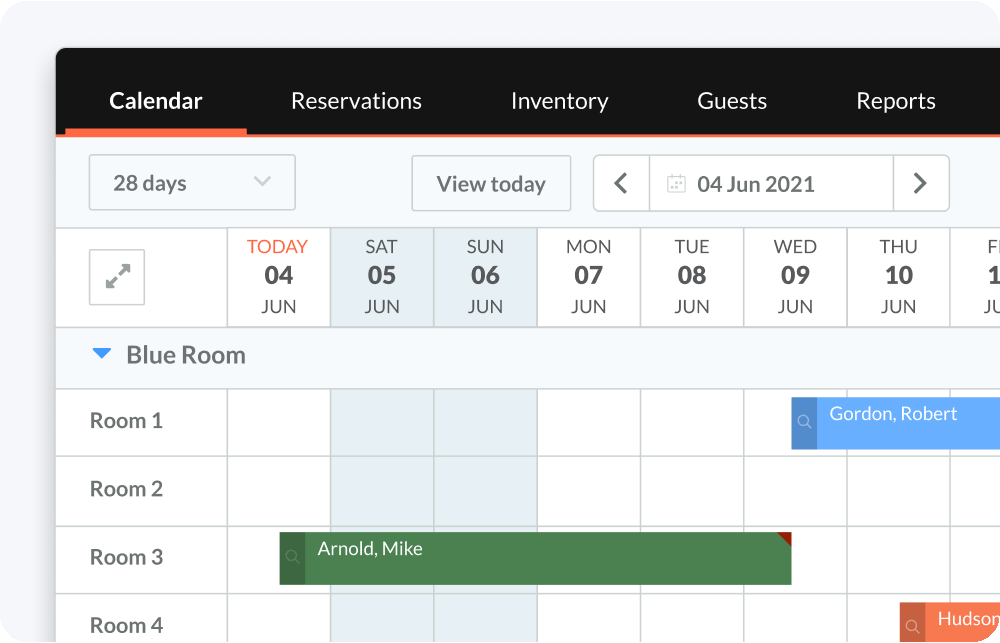
A great example of an all-in-one hotel reservation system designed specifically for small hotels, inns and B&Bs is Little Hotelier. It combines an intuitive front-desk system, direct booking engine, channel manager and website builder into a single platform, allowing you to easily manage your pricing, availability and bookings.
Using an all-in-one platform is simple. You don’t need to worry about endless tools and software providers, and how they all link up. Everything you need is right there, in one tool.
In fact, around a third of properties using Little Hotelier run a fully connected hotel tech stack: a property management system (PMS), channel manager and booking engine, all of which work together seamlessly. This connected setup ensures that when a booking is made, every listing on every channel automatically updates without you or your team needing to lift a finger.
Why do you need a hotel reservation management system?
A hotel reservation system is a necessity for today’s accommodation providers, both large and small. Today, more than half of all hotel bookings are made online, in a hotel and tourism sector that now makes up around 10% of global GDP.
You simply can’t afford to rely on outdated methods to manage your bookings. Without modern tools and capabilities, you’re at risk of losing a significant amount of business.
Today’s hotels are expected to have reservation systems in place, because it’s more convenient for guests as well as staff. Instead of having to wait for you to be at your desk, guests can quickly check your availability, book and confirm their stays – all without speaking to you.
When you invest in a hotel reservation system you’ll also:
Gain a competitive advantage
There are still many small hotels today that do not have online reservation capabilities. Less people are staying at those locations because they are less visible and not as convenient.
You can get a competitive advantage by being front and centre when travellers are researching, and by making the booking process simple.
Improve operational efficiency
Your hotel’s availability is updated immediately upon receiving a reservation, not only in your own system, but across all of your connected channels.
You will save time on administrative tasks while also minimising the risk of overbooking the rooms at your property.
Key takeaways
- Online bookings dominate travel spending, so digital reservation systems are essential.
- Automated systems allow guests to check availability and book instantly.
- Real-time availability updates across all your booking channels will prevent double bookings.
How does a hotel reservation system work?
A hotel reservation system works by sending and receiving reservation data, usually in partnership with a property management system (PMS) and channel manager.
Information is shared on a two-way basis between the channel manager (and connected channels, including OTA listings and your direct booking engine) and the PMS. The CRS is a helpful middle-man which ensures all data is accurate, up-to-date, and available when needed.
As mentioned, a reservation system is often enhanced or completed by the other systems it integrates with. Take a look at a couple of examples.
How a hotel room reservation system works with your website
When a guest makes direct bookings on your website, your reservation system captures their booking details and secures them instantly. Communicating directly with your broader technology stack, the system immediately updates room availability across all your booking channels – a seamless synchronisation that ensures your live inventory is accurate everywhere, regardless of how or where a guest chooses to book.
How a reservation system works with a PMS and front desk
Your property management system (PMS) is the operational heart of your front desk. Connecting your reservation system directly to your PMS allows new bookings, room rates, housekeeping lists and billing folios to automatically update within your system, without a single keystroke from your end.
If you have listings on a number of OTAs – and you should – this automated synchronisation is critical. On average, a property using the Little Hotelier channel manager distributes across more than four channels at once, each with its own rates, availability, and inventory to keep in sync. When a new booking comes in, those dates are blocked off on all other channels instantly. When you need to change your pricing, you can update rates across all channels in a single click.
What features should you look for in a hotel reservation system?
Essential features to look for in a hotel reservation system include integration, secure payment processing, automated guest communications, mobile access and real-time reporting. Choosing a platform with round-the-clock customer support also ensures your property maintains uninterrupted operations.
Selecting the right system involves choosing tools that streamline daily administration while also creating a smoother experience for guests. To maximise efficiency, operators should prioritise the following key features when choosing their all-in-one hotel reservation system:
- Integration – It’s imperative that a hotel reservation system can integrate seamlessly with other systems a hotel is using such as a booking engine or channel manager – otherwise tasks are just as clunky as they were without technology.
- Online payment processing – Guests have become more comfortable with making payments online, in fact it’s now their preferred method of payment. To avoid abandoned bookings it’s important to ensure you can accept online payments that are secure, fast, convenient, and multi-currency enabled.
- Guest reservation management – Creating guest profiles and having the ability to send guest communications is vital to maintaining a good guest experience. A reservation system should make it easy to add and edit guest details, and create personalised guest emails.
- Mobile app – Investing in a provider that has a good mobile app will make a huge difference. With a hotel mobile app you’ll get alerts and notifications and the ability to manage reservations remotely. This will give you valuable freedom, so you don’t have to constantly monitor your front desk or office.
- Reporting and insights – Access to reports and performance insights should be a natural feature of a reservation system. Understanding your performance and having a clear view of all your property insights will allow you to make better decisions.
On top of all this, perhaps the biggest feature of all is support. A hotel is essentially a 24/7 business so your system has to be operational at all times. If something goes wrong, it’s crucial that you can get support quickly to resolve the issue.
What are common hotel reservation system problems (and how do you solve them)?
Common hotel reservation system problems include double bookings, guest booking abandonment, inaccurate guest information, poor guest communication and limited performance visibility – all of which can indicate you’ve chosen the wrong software. Hoteliers can solve these challenges by adopting integrated, all-in-one software that automates inventory distribution, streamlines online booking, captures guest details and generates real-time reports.
The importance of an effective hotel reservation system:
- 65% of all global travel bookings are currently made online, and by 2028 online channels are projected to generate 76% of all travel and tourism revenue.
- SiteMinder’s guest acquisition platform alone processes over 245 online hotel bookings every minute, or more than 135 million reservations per year.
- Despite the rise of OTAs and AI, direct bookings maintain a top-three position for revenue generation in 90% of analysed markets, highlighting the importance of having your own reservation system as a small hotel.
Not all systems and tech providers are made equal. It’s also unrealistic to think there won’t be technical issues occasionally.
Here are some common problems hoteliers encounter and how to solve them.
Double bookings caused by lack of integration
Overbooking not only causes guests to be unhappy, but it can also result in lost revenue. Solve this problem by using an all-in-one system that supports seamless integration, which keeps your inventory accurate across all channels at all times.
Guests abandoning bookings due to a poor booking experience
When your online booking process is confusing, slow or not mobile-friendly, potential guests will abandon their reservations before completing them. According to SiteMinder’s Changing Traveller Report, more than one in two travellers have abandoned an accommodation booking because of a poor online experience, rising to almost three in four among Gen Z guests.
You can overcome these issues by using a streamlined, user-friendly booking engine that lets guests check live availability, select their rooms and complete secure payments in a few simple steps.
Lack of required features
When you use a system but still find yourself doing manual work and spending too much time, it means something isn’t right. This makes you look unprofessional or causes you to lose out on revenue because you’re missing opportunities.
Overcome this challenge by thinking carefully about what problems you are trying to solve. For example, you may simply be looking to increase bookings and save time. Or, you might want more detailed features such as the ability to close rooms for arrival or departure at certain times.
Inaccurate information or not enough information
If the current system you are using doesn’t allow you to request key information, or some information isn’t being passed along, this will create problems. For example, if you don’t have the arrival time for a guest it will be hard to prepare for their check-in adequately.
With a leading all-in-one solution that prioritises seamless integration, you should have all the data you need. You’ll also be able to access it at the click of a button and even print out the information you need to keep handy.
Poor guest communication
If you forget to send communications or send messages at all different times it will be a negative experience for the guest. You’ll never have to encounter this struggle again when you use a reservation system that enables you to automate guest communications and personalise your messaging for each guest.
You don’t know what works
With a small budget, it’s important to know which tactics are providing value and which strategies need to be adjusted. If you don’t have enough performance insights easily available, you won’t be able to make informed decisions.
Being in the know can become less difficult when you utilise a system that has advanced reporting capabilities. Instantly view guest information and generate performance reports without having to worry about using spreadsheets.
Key takeaways
- All-in-one reservation software resolves double bookings by syncing room inventory in real time.
- Simple, user-friendly online checkouts on fast and secure direct booking websites stop guests from abandoning their bookings.
- Automated communication and reporting features stop errors from being made and enhance the guest experience.
What are the types of reservation systems in the hotel industry?
It can seem like there are many types of reservation systems in the hotel industry, and it can get confusing for hoteliers.
Often different terms for a reservation system mean the same thing, but there can also be some differences between tools. Let’s take a look at five of the most common types of systems you may come across.
1. Manual hotel reservation system
A manual hotel reservation system is a traditional system that does not involve advanced technology. This means the hotel would manage reservations via pen and paper, logbooks, phone calls, in-person, or with other physical means.
Manual reservation systems are far less common in hotels these days, since using online tools makes everything so much simpler, quicker, and more effective. If hotels want to be successful, they often need to leave outdated manual methods behind.
2. Web-based hotel reservation system
A web-based hotel reservation system, or an online booking system, uses the internet to manage tasks and integrate with other online systems. It’s a much preferred method of managing reservations, availability, and distribution when compared to a manual system.
Using a web-based system allows for automation, synchronisation, and simplicity. This gives hoteliers more time and freedom to live the life they want and also make better business decisions.
3. Hotel central reservation system
A central reservation system (CRS) manages room inventory, rates and reservations, either as a standalone tool or as part of a property management system. The term is often used interchangeably with “hotel reservation system”. For a full breakdown of how a CRS works, see our guide to the central reservation system.
4. Small hotel reservation system
Small hotel reservation systems are the same as most reservation systems, but are designed in a way that caters specifically to small accommodation providers.
This means prioritising ease of use, affordability, and reliability.
Often small properties have a few select goals and features they are looking for to make life easier. A good provider will deliver this without making the hotelier pay for what they aren’t going to need or use. Little Hotelier is an example of a reservation system that specifically targets small accommodation providers.
5. Motel reservation system
A motel reservation system is the same as a hotel reservation system. While a motel owner may look for providers that meet all the unique requirements of their property, the uses and benefits of the reservation system should be very similar.
Key takeaways
- Modern web-based reservation systems simplify, automate and increase the accuracy of booking management.
- The best central reservation systems manage room rates and availability from within a wider management platform.
- The best software for small hotels will be tailored to the unique needs of independent operators.
Can you use a hotel reservation system for free?
While you can’t secure a quality hotel reservation system that’s free forever, most providers offer a free trial of their system.
The free trial will enable you to enjoy all the benefits of the product for a set period of time free of charge. You can use this time to learn the system, measure any results, and decide if it provides enough value to your business to warrant an ongoing investment.
In the case of Little Hotelier, you can try the platform for free. When you do become a paying subscriber there will still be no contract, you’ll simply pay a set monthly fee based on the size of your property.
To see how your property might be priced, visit Little Hotelier’s pricing scale here.
Taking a hotel reservation system tutorial
Besides a free trial, you can also get an online tutorial, or demonstration, of the system you are interested in.
The demo will give you a quick but comprehensive overview of the features and functionality of the system so you can make a better decision about whether you want to use it at your hotel.
See an example by watching a demo of Little Hotelier here.
The process of implementing a hotel reservation system
With the right provider, implementing a hotel reservation system at your property can be quick and painless. Many Little Hotelier properties go live on the very same day they sign up, with setup handled through a guided self-serve process. A quality provider will include helpful guides and support along the way.
When you express your interest you should be contacted within one business day to get setup; configure your system and begin your training. The first month will be considered a free period. After the month is up you can choose to become a billed customer or simply stop using the product.
Frequently asked questions about hotel reservation systems
Is a hotel reservation system the same as a channel manager?
No, they’re different tools. A hotel reservation system manages internal operations like guest profiles, front-desk check-ins, room assignments and billing. A channel manager is a specialised distribution tool that connects your reservation system to third-party booking sites (like Booking.com, Expedia and Airbnb) and allows you to synchronise rates and room availability across all your listings in real time. The two systems do work together though.
Do small hotels and B&Bs really need a reservation system?
100% they do. Small properties need reservation systems to automate admin, prevent double bookings, and accept reservations and payments 24/7. Operating without one forces hoteliers to rely on inefficient and ineffective manual methods, which leads them to waste endless time on low value tasks.
How much does a hotel reservation system cost?
Software costs typically range from $150-$300 per month for small properties, usually calculated based on room count and feature requirements. The best providers will charge a flat monthly subscription with no long-term contracts, though additional payment processing fees or per-booking commissions might apply depending on the setup.
How do hotel reservation systems handle cancellations and refunds automatically?
When a guest or channel cancels a booking, the system can be set up to automatically process the cancellation in line with your policies. A full or partial refund can be triggered to the guest’s original payment method, and the reservation status can be updated immediately to re-open the room for rebooking by other guests.
How do hotels prevent overbooking with a reservation system?
Hotels can prevent double bookings by linking their reservation system to a channel manager. The moment a room is reserved on any booking platform – whether via an OTA like Booking.com, the hotel’s website or through the GDS by a travel agent – your inventory is automatically and instantly updated across all your connected channels.

By Shine Colcol
Shine is the SEO and Content Manager of Little Hotelier, the all-in-one software solution purpose-built to make the lives of small accommodation providers easier. With more than five years of experience and expertise in content strategy, creation, and management, Shine has produced informational content across various topics, mostly around improving daily operations and increasing business metrics. She aims to share well-researched articles in hopes of helping bed and breakfast owner-operators win more bookings and gain more control of their small property.
Table of contents


Free ebook
The ultimate A-to-Z guide to Little Hotelier
“Little Hotelier is easy to use and simple to teach others to use too. Provides all the information needed to run a business smoothly.”
, Albany Central Apartments, Australia



Meg Hollins,
Marketing & Events Manager
Holbrook Hotel