
 Channel Manager
 Direct Booking Engine
 Metasearch
 Insights
 Dynamic Revenue Plus
 Channels Plus
 Property management system
 Payments
 Guest Engagement
 Mobile App
 Website Builder
 Hotel App Store
 Booking Channels
 Partner Programs
 Customer Stories
 Blog
Blog Templates
 eBooks
 Events

 English
 Reading time 5+ mins
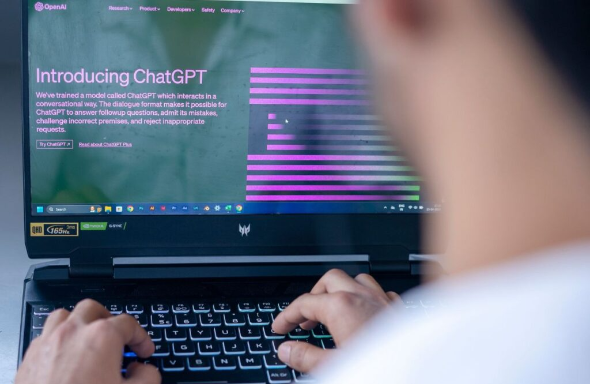
What does AI advertising mean for a small hotel?
AI advertising is the use of artificial intelligence to decide who sees your accommodation’s advertising, what that advertising says, and where it appears. For a small property it can include the automation already running inside the ad platforms you use, the generative tools that produce ad copy and imagery, and whether an AI assistant recommends your hotel when a traveller asks it where to stay.
Previously, a small property such as a guesthouse couldn’t compete with a large hotel group on advertising due to budget and staff constraints. AI has the potential to close that gap for small properties.
However, there is a tradeoff. Travellers who once typed a destination into a search box are now describing the stay they want to a chatbot, and the shortlist that comes back is shorter than what used to appear in Google’s search results. It’s now more important to be recommended than to be found.
In this article we’ll explain what AI advertising means for you and how your small accommodation business can harness it successfully.
Table of contents
Maximise the value of every booking that your advertising wins
Use Little Hotelier to automate distribution, convert more guests, and maximise revenue from every reservation via an all-in-one management system.
Learn more
Why does AI matter for hotel advertising right now?
Advertising in the hotel industry is shifting, and AI is at the core of these changes. AI is impacting both traveller behaviour and how advertising and tech platforms operate.
SiteMinder’s Changing Traveller Report found that eight in ten travellers now want AI assistance somewhere in their booking journey, and that AI usage for accommodation research has grown almost fourfold in a single year. That is a sign that new habits are forming in the way guests approach travel.
The second shift is on the technology side. The advertising tools small hotels already use have become AI-run from the inside out. There are now AI agents that can act as digital travel assistants, planning trips and recommending hotels to guests based on data and research that they access autonomously. This makes it crucial that publicly available information and content about your property is directly relevant to the types of guests you want to attract.
The encouraging part is that small properties are not the stragglers here. Research across 1,485 hotels in six European markets found that 41% of independent hotels are already using AI, with a further 16% intending to adopt it. A parallel study of 171 hotel chains covering more than 11,000 properties found that although 78% of chains use AI, only 7% have a company-wide strategy for it, with data integration the main sticking point.
How is AI already built into the ad platforms small hotels use?
The most common misconception about AI advertising is that it is something you have to go and buy. For most small properties, it is already switched on.
Smart bidding decides what each click is worth
Automated bidding strategies use signals a human could never process in real time, including device, location, time of day, query wording and dozens of behavioural cues, to work out how much a given impression is worth to you. You can set a target cost per acquisition and the platform adjusts your bid accordingly. For busy small operators who don’t have the time to manage advertising campaigns, this is a great leveller.
Automated campaign types choose where your ad appears
Campaign formats such as Google’s Performance Max hand the platform your assets, your budget and your goal, then decide across search, video, display and maps where those assets should run. Google has continued extending these AI layers across its search campaigns, and reports that its AI Max product is reaching search demand advertisers previously never saw at all.
Generative tools now write the creative
Ad platforms can now produce headlines, descriptions and images drawn from your existing assets and landing page content. Google reports a threefold increase in Gemini-generated assets made by advertisers across 2025, with close to 70 million creative assets generated in a single quarter through its AI Max and Performance Max campaigns.
There is an obvious benefit for hotels that don’t have the time or resources to do this themselves, but the catch is that the generated copy also doesn’t know that your rooms are named after local wildflowers, and has no idea which of your three room types you actually need to sell in September.
What’s crucial is that you can provide these tools with rate accuracy, clean property descriptions, strong photography and a quality booking engine to ensure success.
For the channel-level mechanics, our complete guide to Google Hotel Ads covers bidding models and setup, and our guide to Google pay-per-click campaigns covers campaign structure for small properties.
How can small hotels get discovered in AI search and AI assistants?
Getting discovered by AI search and assistants comes down to two things.
1. Hotels are the most machine-readable corner of travel, but there’s room for improvement
Adobe’s analysis of travel websites found that hotels lead the sector in how much of their content AI can actually read, scoring 63% on homepages and 73% on product pages, ahead of airlines across every page type. Rich descriptions, amenity lists and clearly defined room types turn out to be exactly what large language models (LLMs) want.
While this is good news, it still means up to a third of what you have written about your property may not exist as far as an AI assistant is concerned.
Using free AI content visibility checkers that score any single page out of 100 for machine readability can help you see what you need to update.
2. AI visibility is not always something you can buy
When a traveller asks an assistant for a quiet guesthouse near the coast with parking and a good breakfast, the model assembles an answer from what it can read and trust about your property. It typically returns a handful of options, not a page of twenty. There is no submission form, no listing fee, and no account manager to call.
Mentions are earned through:
- Rates and availability that are live and consistent: If an assistant finds one price on your website, another on an OTA and a third on metasearch, it has no basis for recommending you and every reason to recommend somebody else.
- Property information that is structured: Models handle bulleted amenity lists, defined room types, explicit policies and accurate coordinates far better than a paragraph about the owner’s grandmother.
- A booking engine that is actually connected: An assistant that can surface you but cannot pass the traveller through to a bookable page has delivered you an admirer, not a guest.
- Answers to the questions travellers actually ask: Parking, late check-in, pet policy, walking distance to the station. The specific queries you get by email are the specific queries being typed into assistants.
- Third-party corroboration: Reviews, directory listings and local mentions give a model independent confirmation that your property is real and is what it claims to be.
It’s worth noting that Adobe’s tracking shows traffic from AI sources to travel sites growing 194% year on year, with those visitors spending 70% longer on site, bouncing 41% less and registering 21% higher engagement than visitors from other channels. Someone who arrives from an AI recommendation has already asked a specific question and been given a specific answer.
Paid placement inside AI assistants is beginning to appear, with some platforms testing sponsored recommendations. However, it’s still quite early and suits a small test budget rather than committed spend. For most small properties, the earned levers above are where the effort belongs.
Key takeaways:
- AI assistants recommend a handful of properties, not a list, so data accuracy matters more than presence on many platforms.
- Hotels are the most machine-readable sector in travel, yet over a third of their page content still cannot be read by AI.
- Paid placement inside assistants is real and emerging, but it currently suits a small test budget instead of committed spend. Earned visibility is where a small operator should focus first.
How can a small hotel start using AI for advertising on a limited budget?
The best way to start is to start small, and you can see results without a large budget. This is achieved by optimising everything that’s already in your power to clean up and making an airtight plan before you execute anything.
- Fix the inputs before you touch the ads: Every dollar of automated bidding runs on the accuracy of your rates, availability and property content. Cleaning those up costs nothing and improves every channel at once.
- Let automated bidding do the work: Set a realistic target, give it a fortnight of data, and resist adjusting it daily.
- Use metasearch as your entry point: It puts your direct rates where travellers compare, and the platforms’ AI runs the auction on your behalf. It is generally the cheapest way for a small property to buy visibility against OTAs.
- Write the brief, not the ad: Give generative tools your actual differentiators, your seasonal pressure points and your booking policies, then edit to ensure the outputs are relevant enough to your property.
- Measure completed stays, not clicks: A small property’s advertising budget is too tight to be judged on traffic. Cost per completed stay is the number that matters.
What are the risks and limits of using AI in hotel advertising?
AI is not a magic bullet or a cure-all, and it doesn’t replace the lived-in experience that you have being in the industry and running an accommodation business daily.
Here are some key considerations to keep in mind:
- Generated copy drifts from your brand: AI-produced headlines and generic language can take away from the unique identity many small properties rely on.
- Your guests may be told the ad was made by AI: Google now surfaces a “How this ad was made” panel across Search, YouTube and Discover, automatically disclosing when its own generative tools produced an ad and offering advertisers a control to declare AI used elsewhere. This does risk alienating some audiences.
- Automated budgets can move faster than you can: Broad targeting and query expansion can spend your month’s budget on searches that were never going to book a room.
- Stale data becomes misinformation: If an assistant reads an outdated rate or an old policy, it will repeat it with total confidence to every traveller who asks.
- Measurement is murky: Platforms rarely explain how their models made a decision, and AI-assistant referrals are difficult to attribute cleanly.
- Guest trust has limits: Travellers are increasingly comfortable with AI helping them find a hotel, and considerably less comfortable with AI handling the human parts of the stay.
Frequently asked questions about AI in hotel advertising
Can a small hotel use AI advertising without a marketing team?
Yes, and increasingly that is who it is built for. The expertise that once justified an agency, bid management, audience selection and creative testing, now runs inside the platforms themselves. Your remaining job is supplying accurate rates, clear property information and honest photography, then reviewing performance monthly rather than daily.
Is AI advertising expensive for a small property?
It does not have to be. Metasearch through Little Hotelier can start from around a dollar a day, and you are charged only once a guest completes a stay. Generative creative tools are increasingly bundled into the ad platforms rather than sold separately. The larger risk for a small property is not the price of entry but automated budgets spending without supervision.
How do I get my hotel to show up in ChatGPT or Google AI Mode?
There is no listing form. Earned visibility comes from live, consistent rates and availability across your channels, structured property content, a connected booking engine and independent corroboration through reviews and directories. Paid placement is a separate path, bought through the advertising platforms, and it stops the moment the budget does.
Can I just use free AI tools like ChatGPT, or do I need dedicated software?
Free tools are useful for producing things like ad copy, property descriptions, social captions, and first-draft video scripts. What they cannot do is distribute your live rates and availability to the places travellers and assistants are looking.
How do I know if AI advertising is actually working?
Watch the share of bookings coming direct, the cost per completed stay rather than per click, and any referral traffic arriving from AI assistant domains in your analytics. Give each change a full booking window before judging it, because a small property’s data is thin enough that a single week will tell you almost nothing.

By Dean Elphick
Dean is the Senior Content Marketing Specialist of Little Hotelier, the all-in-one software solution purpose-built to make the lives of small accommodation providers easier. Dean has made writing and creating content his passion for the entirety of his professional life, which includes more than six years at Little Hotelier. Through content, Dean aims to provide education, inspiration, assistance, and, ultimately, value for small accommodation businesses looking to improve the way they run their operations (and live their life).
Table of contents


Free ebook
The ultimate A-to-Z guide to Little Hotelier
“With the mobile app, you can run your business from wherever. It's incredibly user-friendly and straightforward. Little Hotelier also offers 24/7 customer service.”
Owner, Sundowner Twin Towns Motel




Mick Comerford,
General Manager
The Mercantile Hotel