
 Channel Manager
 Direct Booking Engine
 Metasearch
 Insights
 Dynamic Revenue Plus
 Channels Plus
 Property management system
 Payments
 Guest Engagement
 Mobile App
 Website Builder
 Hotel App Store
 Booking Channels
 Partner Programs
 Customer Stories
 Blog
Blog Templates
 eBooks
 Events

 English
 Reading time 5+ mins
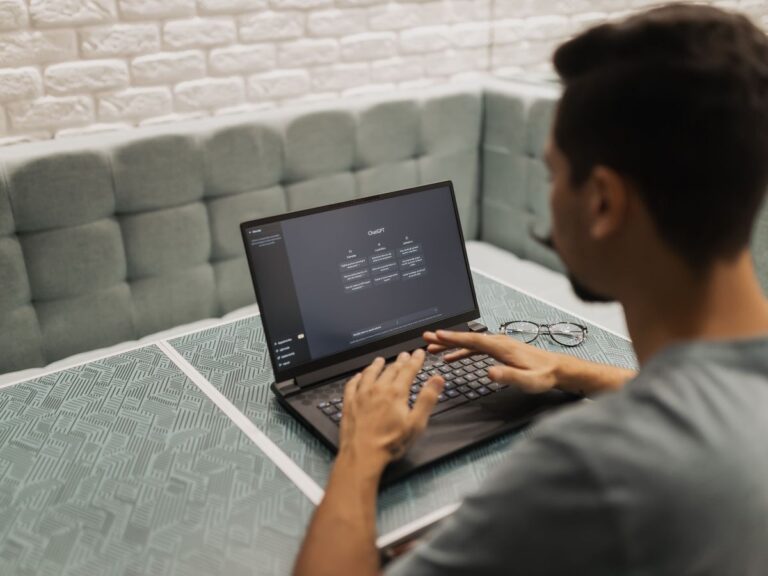
What is AI in the hospitality industry?
AI in the hospitality industry is smart, automated software that analyses data, predicts outcomes, and takes care of admin. AI’s ability to process information and complete digital tasks means that it won’t replace a hotel’s human workers, but will instead enhance them, allowing a property to offer faster, better service, make smarter pricing decisions, and streamline its operational processes.
AI in the hospitality industry is no longer an expensive or overly complex luxury limited to the biggest players – small, independent hotels are using it too. AI acts as a digital assistant that can transform three distinct areas of your business:
- Running the property: AI can automate time-consuming admin.
- Serving the guests: Smart messaging tools can answer queries, offer personalised recommendations and even sell rooms 24/7.
- Getting discovered and booked: AI is now a common tool people use to plan trips, and there are ways to encourage Gemini, Claude and ChatGPT to suggest your hotel as the best option.
This guide explains why small, independent hotels should utilise AI, and exactly how to do it.
Table of contents
Start capitalising on AI today with Little Hotelier
Between pricing tools, automated guest messaging, and integrated AI chatbots, Little Hotelier makes it simple to start using AI to boost your revenue.
Learn more
How is AI changing the way small hotels operate?
AI in the hospitality industry is currently reshaping how small hotels operate by turning complex admin into automated tasks that are taken care of in the background, without you needing to lift a finger.
Practical ways AI is transforming operations for independent properties include:
- Instant guest messaging: Smart chatbots can handle guest enquiries 24/7, answering all manner of questions about check-in, parking, amenities and local recommendations.
- Smarter dynamic pricing: AI pricing algorithms can analyse local competitors and market demand to recommend the ideal room rates that maximise both bookings and revenue – no dedicated revenue manager required.
- Saving hours on admin: AI automates time-consuming, low-value tasks like check-ins and housekeeping schedules, freeing up staff to focus on higher-value jobs, like enhancing the guest experience.
- Reputation management: Generative AI tools can instantly draft professional responses to reviews.
- Targeted marketing: LLMs can help you generate the emails, DMs, social media posts and blog content that help you drive bookings.
- AI search discovery: AI is increasingly being used as a travel planner, including offering up hotel options. Small hotels can encourage these tools to serve users live rates and direct booking links as part of these planning conversations.
How are travellers using AI to find and book small hotels?
Travellers use AI tools like ChatGPT, Gemini and Claude to research destinations, build out travel itineraries and shortlist hotels based on their personal preferences. These tools allow guests to discover small, independent properties without visiting a traditional search engine or OTAs like Booking.com or Expedia. This shift towards conversational travel planning makes it critical to ensure that AI can see and suggest your hotel.
As noted in SiteMinder’s Changing Traveller Report 2026, 80% of travellers are now looking for AI assistance at some stage of their booking journey. AI adoption is particularly eager in Asian markets: 79% of Singaporean and 60% of Indonesian travellers say an AI concierge would enhance their stay.
While younger travellers have unsurprisingly adopted AI faster, all demographics seem to want smart systems to track personal preferences: 30% want AI to monitor eating habits for restaurant recommendations, 29% use health data to select destinations, and 28% mention noise sensitivity to ensure a quiet stay.
Understanding how guests interact with these tools is crucial for securing direct revenue:
- Getting discovered in AI search: Showing up in these AI recommendations through both earned visibility and paid placement, is a discipline in its own right. It’s one that small independent properties are genuinely well placed to win at, and it’s a big enough topic to deserve its own guide.
- How AI agents choose and complete bookings: AI travel agents evaluate real-time rates and availability, guest reviews, amenities and booking policies before serving up a direct booking link to the traveller.
Key takeaways:
- Travellers use generative AI tools to shortlist independent hotels before visiting OTAs and direct booking websites.
- 80% of travellers now seek AI assistance during their trip planning and hotel booking journey.
- AI agents select hotels by evaluating real-time rates, availability, guest reviews and hotel information.
What are the benefits of AI for small hotels?
The growing impact of AI, by the numbers:
- 30% of hoteliers increased their automation investment over the last six months to combat ongoing labour shortages.
- 76% of global travel revenue is projected to come from online booking channels, with AI increasingly influencing how these bookings are made.
- 66% of Millennials prefer the direct bookings that AI tends to encourage, allowing hotels to avoid OTA commission fees.
Independent hotels that adopt AI can feel an immediate impact from the tech, even on a limited budget. It’s important to note that the payoff also compounds as you hand over more tasks. Here’s what small properties stand to gain:
- Hours back every day: Automate routine admin like guest messaging and schedule syncing to potentially save hours of manual effort every day.
- Answer queries 24/7: AI-powered chatbots can answer common guest questions immediately, all day every day, and even encourage bookings.
- More revenue per room: AI dynamic pricing algorithms suggest room rates that maximise both bookings and revenue, based on real-time market data.
- Protect your brand reputation: Get help from AI to draft professional, personalised responses to guest reviews to maintain a healthy online reputation.
- Get repeat guests: Get AI to track guest habits and preferences across visits, then use this data to offer tailored recommendations and personal touches.
- Maintain your AI search visibility: Keep room rates and inventory in a form that AI can easily read, so your property is presented as a compelling option by ChatGPT and Gemini.
Key takeaways:
- Independent hotels using simple AI tools can save hours of manual admin every day.
- AI chatbots can handle guest enquiries and even secure bookings outside normal reception hours.
- Smart pricing helps small properties boost bookings and revenue.
What are some practical examples of AI for small hotels?
Wondering about the specifics of how small hotels use AI? The good news: you don’t need a big-time budget or a dedicated AI team. You simply need practical tools that handle specific jobs, and that can run in the background with limited oversight, to save you time and drive more bookings.
Here are four practical ways small properties can use smart automation right now:
AI guest messaging
Instead of answering the same questions about parking, check-in times and WiFi passwords over and over again, get an AI messaging tool to handle these queries. Apps like HiJiffy integrate directly into your booking engine to respond to questions 24/7, share local recommendations and capture bookings while you sleep.
Smart pricing assistance
Setting room rates manually can take hours of market research and data entry. Smart pricing solutions analyse local market demand and competitor activity to recommend the ideal rate for any given day. Little Hotelier’s Dynamic Revenue Plus, for example, tracks market shifts and sends real-time rate recommendations straight to your phone, helping you to maximise the money you make on every booking.
Review response generators
Managing reviews across Google, TripAdvisor and OTA platforms is a time-consuming task. Generative AI can quickly read feedback and draft polite and professional replies to help you maintain your reputation without spending hours carefully crafting responses.
Content and marketing drafting
Marketing is easy to push to the bottom of your priority list, particularly the time-consuming tasks of writing blogs, newsletters and social media captions. Free AI writing assistants help you draft posts, emails and website descriptions in seconds. You provide a few quick details about a seasonal special or local event, and the tool generates ready-to-publish copy.
Key takeaways:
- AI chatbots can respond to guest enquiries and capture bookings 24/7/365.
- Smart pricing solutions like Dynamic Revenue Plus recommend rates based on real-time market data.
- Generative AI can quickly draft review responses, emails and social media content.
How can a small hotel start using AI on a limited budget?
Small hotel operators can start small and gradually build up their AI arsenal. A great first step is to think of a single administrative or operational pain point, then look for an AI-powered tool to solve it. You’ll soon find that most tools can do far more than the task that you initially implemented them for.
Here is a simple, four-step approach to adopting AI as a small hotel:
1. Fix your biggest pain point first
Identify the single task that steals most of your time. If it’s answering guest queries, focus on guest messaging tools. If it’s setting room rates, look for dynamic pricing assistance. Solving a specific problem makes shopping for and setting up a tool far simpler. You enjoy an easy win upfront, and you also tend to find a wealth of other use cases as you begin to utilise the tool.
2. Choose plug-and-play tools
Avoid complex, custom-built software that demands lengthy training or expensive setup. Look for lightweight tools that integrate with your existing technology. Many budget-friendly AI tools offer month-to-month plans or free trials so you can test them with zero risk.
3. Build a solid data foundation
For AI tools to work, they need access to reliable, real-time data. Use a property management system and channel manager to keep your rates, availability and listing information synced across your systems and the internet.
4. Track results and gradually expand
Review performance after a few weeks. Are you spending less time on the task that you’ve handed to AI? Are enquiries being answered faster? Are you earning more bookings and revenue? Once your initial tool proves its value, explore ways to expand your use of AI.
Key takeaways:
- Identify your biggest operational pain point first to secure a fast and easy AI win.
- Choose simple plug-and-play tools with free trials or flexible month-to-month plans.
- Power your AI tools with clean and accurate data by using a property management system to create a single source of truth.
What does the future of AI look like for small hotels?
The biggest technological shift on the horizon for independent hotels is in the zeroes and ones of guest data, and how AI can use this information to suggest ever more relevant and personalised accommodation options.
Soon, travellers won’t just ask tools like ChatGPT or Gemini for hotel ideas. They will give AI travel agents permission to research, choose and book rooms for them, based on their budget and preferences.
When an agent scans the web to place a booking, it doesn’t look for pretty pictures – it looks for clean, readable data. This means the future winners in hospitality won’t necessarily be the biggest properties or those with huge budgets.
The hotels that win bookings will be those that offer the best quality information to AI, to allow these agents to make the best recommendations possible. If data contradicts itself – say your direct booking website and your Expedia listing feature different room descriptions and amenities – the agent will view this as untrustworthy, and will avoid suggesting you at all.
On the flipside, if you make your hotel as readable, reliable, connected and enticing as possible, you’ll put yourself in a position to win.
FAQs on the use of AI in the hospitality industry
Will AI replace staff at a small hotel?
No, it won’t. AI automates low-value admin like answering messages, syncing schedules and setting room rates. This frees you and your team to focus on delivering high-touch, personal hospitality to on-site guests.
Where should a small or independent hotel start with AI?
Start by addressing your single biggest operational or administrative pain point. If that’s replying to repetitive questions, implement an AI messaging tool. If it’s manually setting room rates, use a dynamic pricing tool to automate those adjustments.
How much does it cost for a small hotel to use AI?
Getting started can be surprisingly budget-friendly. General AI tools like ChatGPT and Claude offer free tiers. More targeted and integrated operational tools – automated messaging, dynamic pricing – typically run on flexible, month-to-month subscriptions that are priced according to the size of your hotel.
How do travellers use AI to book small hotels?
Modern travellers will often ask platforms like ChatGPT, Gemini and Claude to offer up tailored travel recommendations. These AI platforms scan the web for information around pricing, availability and reviews, then shortlist hotel options, complete with direct booking links.
Is AI worth it for a property with under 20 rooms?
100%. If you run a hotel with under 20 rooms, you probably find yourself stretched thin and forced to wear all manner of different hats. Automated tools run in the background 24/7, to help you save hours on admin every day and earn you more revenue while they’re at it.

By Juhlian Pimping
Juhlian is the SEO and Content Manager at Little Hotelier, the all-in-one hospitality software designed specifically for small accommodation providers like boutique hotels, B&Bs, guesthouses, and inns. With extensive experience creating impactful content in the SaaS space since 2018, he specializes in developing resources that help property owners take back control of their daily operations, boost direct bookings, and enhance guest experiences.
Table of contents


Free ebook
The ultimate A-to-Z guide to Little Hotelier
“Booking is simple and quick, from a phone while outside. It helped me optimize my hotel for searches. I haven't needed online booking sites (or pay their fees).”
Owner, Quincy Hotel



Dewa Arsana,
Property Manager
Castaway Boutique Resort